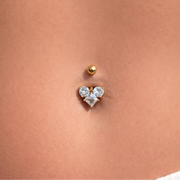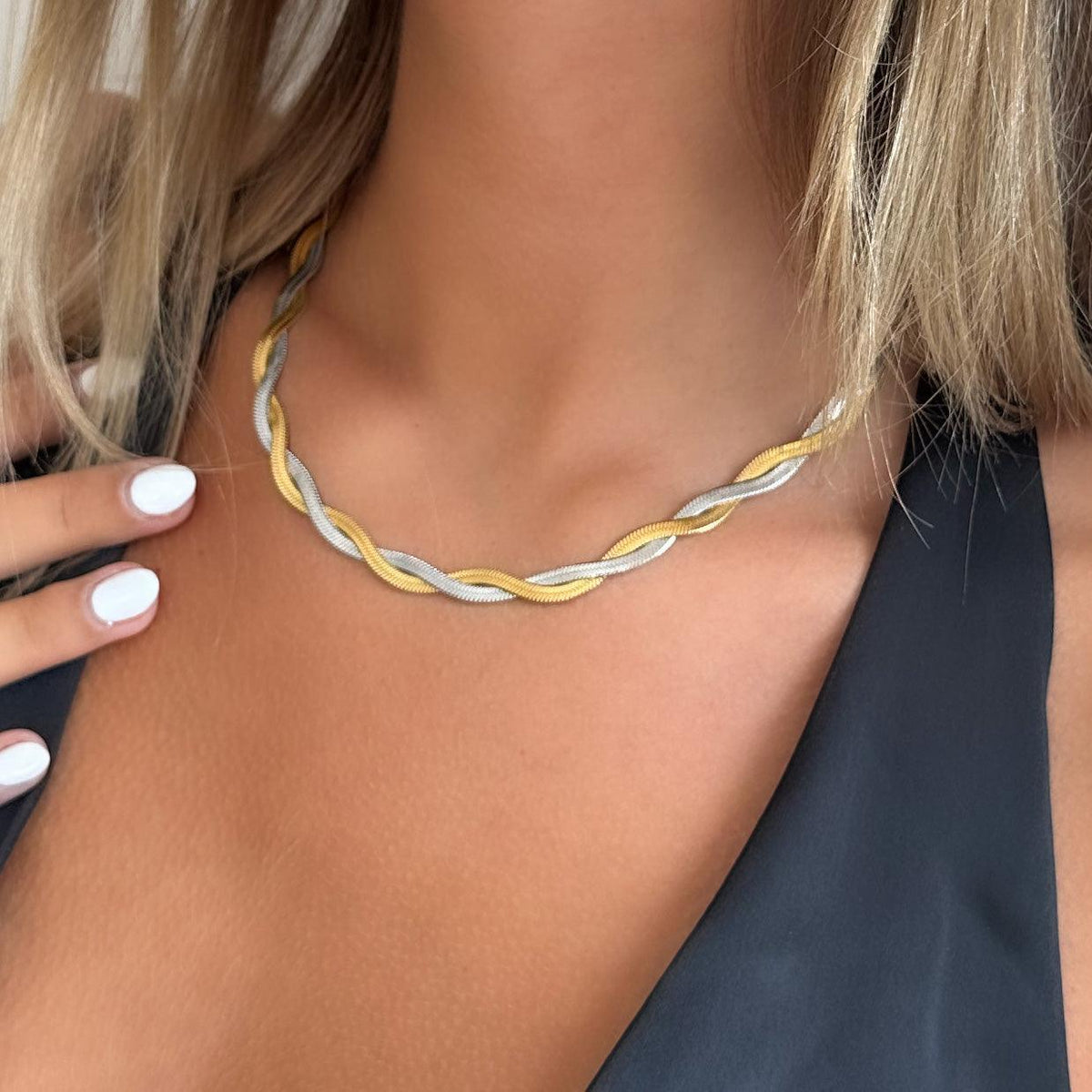
The four main types of gold used in jewelry are yellow, white, rose and green gold. Each color comes from the metals mixed with pure gold: silver and copper keep it yellow, palladium or other white metals make white gold, extra copper makes rose gold and extra silver makes green gold. Karat measures purity separately, and plating or filling describes how a piece is built.
Below you will find the real alloy recipes behind each color and a simple way to choose the right one.
Gold Colors at a Glance
Gold color depends on the alloy, not on the amount of gold, so 14K gold can be yellow, white or rose. The World Gold Council publishes typical recipes, and the table compares them at 14 karats, where every color holds the same 58.3% gold.
| Type of gold | Typical 14K mix | Main color metal | Look |
|---|---|---|---|
| Yellow gold | 58.3% gold, 30% silver, 11.7% copper | Silver and copper in balance | Warm, classic gold |
| White gold | 58.3% gold, 32.2% silver, 9.5% palladium | Palladium or other white metals | Cool, silvery, usually rhodium plated |
| Rose gold | 58.3% gold, 9.2% silver, 32.5% copper | Copper | Soft pink to coppery |
| Green gold | Gold with a high share of silver | Silver | Pale yellow with a green tint |
The yellow, white and rose recipes come from the World Gold Council guide to gold jewelry colour and carat. Exact recipes vary by maker, so treat them as typical rather than fixed.
Yellow Gold: The Classic Type
Yellow gold is pure gold alloyed with silver and copper, often with a little zinc, which keeps the warm color while adding strength. The World Gold Council calls yellow the most popular gold color in jewelry.
The World Gold Council lists a typical 18 karat yellow gold as 75% gold, 15% silver and 10% copper, while 14 karat yellow gold drops to 58.3% gold with 30% silver and 11.7% copper. The more gold in the mix, the richer and deeper the yellow looks next to lower karat pieces.
Yellow gold flatters warm skin tones and pairs naturally with pearls and colored stones. For chain shapes in yellow gold, see the guide to types of gold chains.
White Gold: Real Gold With a White Finish
White gold is real gold alloyed with white metals such as palladium, nickel, silver or zinc, and it is usually plated with rhodium for a bright white finish. Without that plating, most white gold has a faint warm tint.
GIA notes that white gold is usually rhodium plated for a whiter look, a better shine and scratch protection, and that the rhodium wears away over time, so the piece needs replating now and then (GIA guide to white, yellow and rose gold). GIA also advises people with a nickel allergy to avoid nickel white gold alloys. Palladium based white gold, such as the 18K recipe the World Gold Council lists at 75% gold and 25% palladium, avoids nickel altogether.
If metal sensitivity is a concern, the hypoallergenic earrings guide explains what to look for.
Rose Gold: Copper Makes the Pink
Rose gold is gold alloyed mainly with copper and a little silver, and the more copper it contains, the pinker it looks. GIA notes that the tone of rose gold varies with the amount of copper in the mix.
The World Gold Council lists 18 karat rose gold at 75% gold, 9.2% silver and 22.2% copper, and 9 karat rose gold at 37.5% gold, 20% silver and 42.5% copper. Lower karat rose gold therefore carries almost twice the copper share, which pushes its color toward a deeper, more coppery pink.
Rose gold suits most skin tones and looks soft next to both yellow and white metals. Copper is a common allergen, so GIA advises people allergic to copper to avoid it.
Green Gold, Black Gold and Other Colored Golds
Green gold is gold alloyed with a high share of silver, sometimes with cadmium or zinc, which gives a pale yellow green tint. The International Gem Society lists silver as the main metal in green gold alloys.
Green gold has ancient roots. Electrum, a naturally occurring alloy of gold and silver, was popular in Ancient Egypt, and its silver to gold ratio varies from piece to piece, according to the International Gem Society.
Other colors come from surface treatments rather than the alloy. The World Gold Council explains that blue and purple gold come from patinas or oxides on the alloy surface, and that black gold gets its color from cobalt oxide.
Karat and Construction: The Other Two Ways Gold Is Typed
Gold is also grouped by karat (how pure it is) and by construction (solid gold or a gold layer over another metal). These two labels matter as much as color when you compare price and wear.
Karat in brief
Karat measures purity on a scale of 24: 24K is pure gold, 18K is 75% gold, 14K is 58.3% gold and 10K is 41.7% gold. The FTC treats the word "gold" with no karat as meaning 24 karat, so alloys must name their karat (16 CFR 23.3). For a side by side on the two most popular karats, read 14k vs 18k gold plated rings.
Construction in brief
| Construction | What it is |
|---|---|
| Solid gold | Karat gold all the way through |
| Gold filled | A thick layer of at least 10K gold bonded to a base metal, at least 1/20 of the weight (FTC) |
| Vermeil | At least 10K gold, at least 2.5 microns thick, over sterling silver (FTC) |
| Gold plated | A thin layer of gold over another metal; gold electroplate is at least 0.175 microns (FTC) |
The guide to gold filled vs gold plated vs vermeil covers each in depth, and does gold plated jewelry tarnish explains how plated pieces age.
How to Choose the Right Type of Gold
Choose a gold color by your skin tone, your other jewelry and how hard the piece will work. Yellow suits warm undertones, white suits cool undertones and rose works across most of them.
- For everyday rings and bracelets: harder alloys and finishes resist scratches better than very high karats.
- For sensitive skin: avoid nickel white gold and check alloy details.
- For a mixed stack: two tone pieces bridge yellow and white, and the guide to mixing gold and silver jewelry shows how.
EVRY Jewels focuses on affordable fashion jewelry, so check each product page for its finish. For color inspiration, try the Two-Tone Medusa Necklace and its matching Two-Tone Medusa Bracelet, then explore necklaces, rings and earrings. The gold necklaces guide helps with styles and lengths.
Frequently Asked Questions About Types of Gold
What are the four types of gold?
The four main types of gold in jewelry are yellow, white, rose and green gold. All four are real gold alloys, and the color depends on the other metals in the mix: silver and copper for yellow, palladium or nickel for white, extra copper for rose and extra silver for green. At 14 karats, every color contains the same 58.3% gold, so color alone does not change gold content.
What are the five types of gold?
Lists of five types of gold usually mean construction rather than color: solid gold, gold filled, gold vermeil, gold plated and gold flashed. Under the FTC Jewelry Guides, gold filled uses at least 10 karat gold making up at least 1/20 of the metal weight, while gold electroplate must be at least 0.175 microns thick. Gold flashed is a very thin layer that wears fastest, so check which type a product actually is.
What type of gold is most expensive?
Gold price mainly follows karat, because higher karat means more gold by weight. A 24 karat piece contains about 1.7 times the gold of a 14 karat piece at 58.3%, so it costs more for the same weight. Color matters less: yellow, white and rose gold at the same karat hold the same gold share. Alloy metals, design, craftsmanship and finishing such as rhodium plating on white gold explain the remaining differences.
Is white gold real gold?
Yes. White gold is real gold alloyed with white metals such as palladium, nickel, silver or zinc. A 14 karat white gold piece contains 58.3% gold, the same as 14 karat yellow gold. Most white gold is plated with rhodium for a brighter white finish, and GIA notes that this plating wears over time and may need replating. The gold content stays the same underneath.
Is rose gold real gold?
Yes. Rose gold is real gold alloyed mainly with copper, plus a little silver. The World Gold Council lists 14 karat rose gold at 58.3% gold, 9.2% silver and 32.5% copper, so it holds the same gold share as 14 karat yellow or white gold. The copper creates the pink color. Rose gold colored fashion jewelry can also be plated, so check the karat and construction.
Find your favorite tone in the EVRY necklaces collection.