


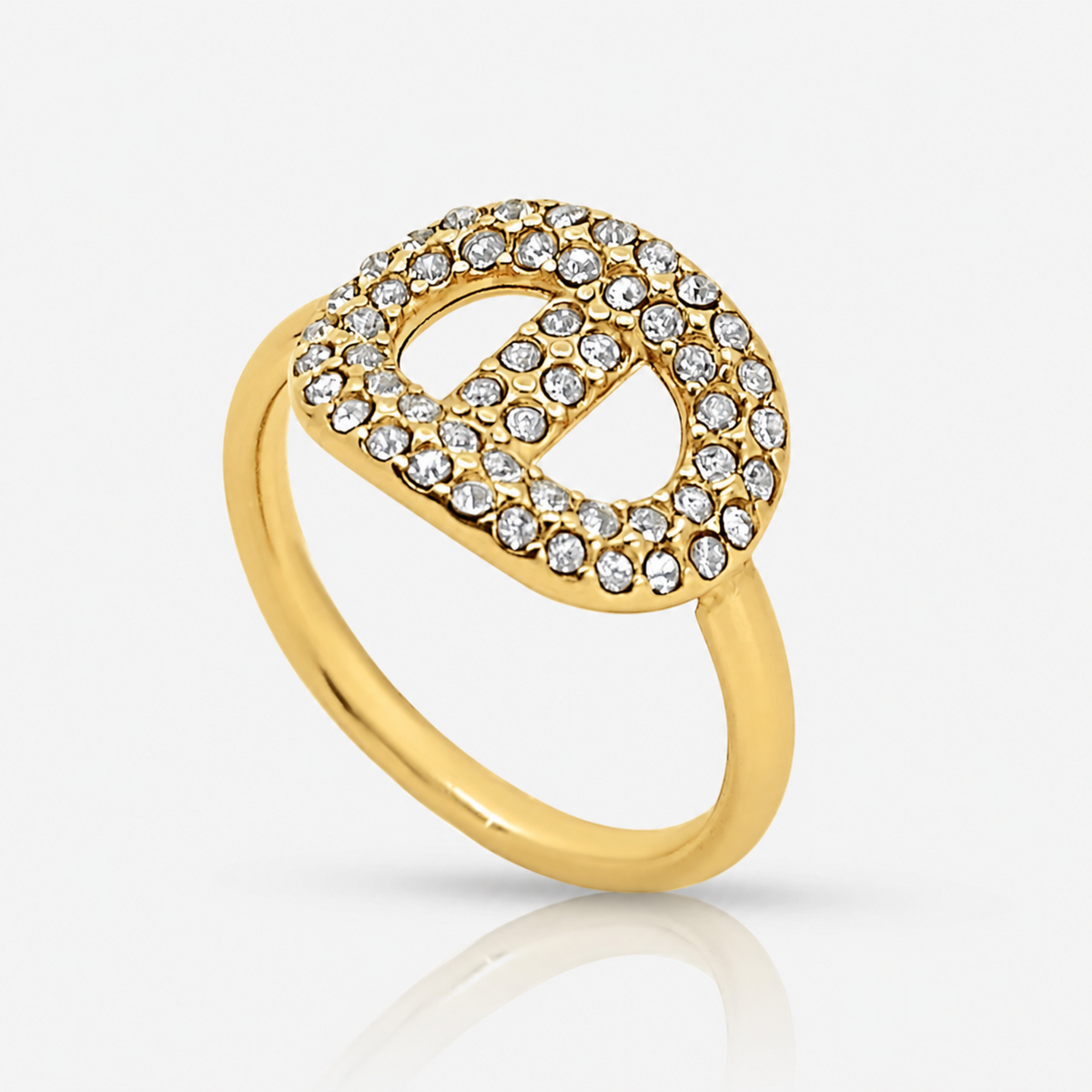
Rhodium plating is a very thin layer of rhodium, a rare, silvery white metal in the platinum group, electroplated onto jewelry to make it brighter, whiter and more resistant to tarnish and scratches. It is most common on white gold and sterling silver, and the layer is often only about half a micron thick.
"Rhodium plated" on a label means the surface you see is rhodium, while the metal underneath is something else. Because the layer is so thin, it wears with time and can be replated.
What Is Rhodium?
Rhodium is a hard, shiny, silvery metal and one of the six platinum group metals, alongside platinum and palladium. English chemist William Hyde Wollaston discovered rhodium in 1803 in platinum ore, and named it after the Greek word rhodon, meaning rose colored.
The Royal Society of Chemistry describes rhodium as the rarest of all non radioactive metals, with world production of only about 30 tonnes a year. About 80% of rhodium goes into catalytic converters for cars, where rhodium reduces nitrogen oxides in exhaust, so jewelry plating uses a small share of a scarce metal (Royal Society of Chemistry, accessed October 2026).
See the Royal Society of Chemistry rhodium profile for full element data, including a melting point of 1,963°C. South Africa is the leading producer of platinum group metals, and the USGS platinum group metals summary estimates the average rhodium price rose 24% in 2025 compared with 2024.
How Rhodium Plating Works
Rhodium plating is applied by electroplating: the cleaned piece is dipped in a rhodium solution and an electric current deposits a thin, even layer of rhodium on the surface. The process takes minutes, not hours.
Rhodium deposits on gold jewelry are usually about 0.5 microns thick and can reach 2 to 3 microns, according to metallurgist Dr. Cris Corti in Gold Technology (2002). Thicker rhodium layers tend to build internal stress and eventually crack, which is why rhodium plating stays thin and needs occasional renewal (Ganoksin, Gold Technology, 2002).
For scale, a micron is one thousandth of a millimeter. The same article, republished by Ganoksin on electroplating jewelry, notes that on lower karat gold, a nickel layer is often plated first so a thinner rhodium coat can be used. That detail matters for anyone with a nickel sensitivity once the top layer wears.
Why Jewelers Use Rhodium Plating
Jewelers use rhodium plating for color, brightness and surface protection. The bright white finish is the main reason, especially on white gold.
- Whiter color. White gold is gold alloyed with white metals, and GIA notes it can look faintly yellow without rhodium plating.
- Tarnish barrier. GIA states that sterling silver plated with rhodium is less likely to tarnish, and that rhodium on white gold provides a barrier against tarnishing.
- Scratch resistance. GIA lists extra scratch resistance among the benefits of rhodium on white gold.
- Uniform look. GIA notes that plating can make 14K and 18K white gold hard to tell apart visually, since both show the same rhodium surface.
Read more in GIA's comparisons of white gold vs silver and of white gold, platinum, palladium and silver. For yellow gold karats, see 14k vs 18k gold plated rings.
On sterling silver, rhodium plating solves the metal's biggest everyday complaint. Sterling is 92.5% silver and 7.5% other metals, usually copper, and that copper helps sulfur in the air form dark tarnish. A rhodium layer keeps the air away from the silver, so the piece stays bright with only a soft cloth wipe. The trade off is that the warm gray white of bare silver turns into a cooler, more mirror like white, and any spot where the plating wears through can tarnish like ordinary sterling.
Rhodium Plating vs Other Finishes
Rhodium plating is a surface finish, so it is best compared with other finishes and with bare metals. The table below sums up how each option looks and wears.
| Finish or metal | Color | Tarnish behavior | Maintenance |
|---|---|---|---|
| Rhodium plating | Bright, cool white | Resists tarnish while intact | Replate when the base metal starts to show |
| Gold plating | Yellow, rose or white gold tones | Can dull or fade as the layer wears | Gentle cleaning; can be replated |
| Bare sterling silver | Warm gray white | Tarnishes with exposure to sulfur in air | Regular polishing and dry storage |
| Platinum | Natural gray white | Does not tarnish | Polishing for scratches; sometimes rhodium plated for extra shine |
For a deeper look at layered gold finishes, read gold filled vs gold plated vs vermeil and does gold plated jewelry tarnish.
Pros and Cons of Rhodium Plating
Rhodium plating is a good choice for anyone who wants a bright white, low tarnish finish, as long as they accept that the layer needs renewing. The trade offs are easy to weigh side by side.
| Pros | Cons |
|---|---|
| Bright, mirror like white finish | Wears away gradually, fastest on rings |
| Helps sterling silver resist tarnish | Wear is often uneven, showing the base color in patches |
| Adds scratch resistance on white gold | May expose a nickel layer or nickel alloy underneath once worn |
| Can be renewed by a jeweler | Repeat replating is an ongoing cost |
If you have sensitive skin, ask what metal sits under the rhodium before you buy. GIA advises people allergic to nickel to avoid white gold alloyed with nickel, and our hypoallergenic earrings guide covers metals to look for.
How Long Does Rhodium Plating Last?
Rhodium plating has no fixed lifespan; how long it lasts depends on the layer thickness and how much friction the piece gets. GIA states that rhodium plating wears away gradually and that rings need replating occasionally.
Rings and bracelets rub against desks, steering wheels and other jewelry every day, so they wear first. Earrings and pendants see far less contact and keep their plating much longer.
GIA explains that as rhodium plating wears off white gold, the ring may start to look warm in color, because the slightly yellow alloy underneath shows through. GIA also notes that some platinum rings are rhodium plated for shine and scratch resistance and need replating from time to time, just like white gold (GIA, accessed October 2026).
To make plating last longer:
- Take rings off for workouts, cleaning, gardening and swimming.
- Apply lotion, perfume and hairspray before putting jewelry on.
- Clean with mild soap and warm water and a soft cloth; skip abrasive polishes and polishing cloths that strip coatings.
- Store pieces separately so harder stones and metals cannot scratch the surface.
Frequently Asked Questions About Rhodium Plating
What are the downsides of rhodium plating?
The main downside of rhodium plating is that it wears off. The layer is often only about 0.5 microns thick, so friction slowly exposes the metal underneath, and GIA notes that rings need occasional replating. Wear is often patchy, and on lower karat gold a nickel layer may sit beneath the rhodium. Replating also adds an ongoing cost, which varies by jeweler and piece.
Is rhodium plated jewelry good quality?
Rhodium plating is a widely used, legitimate finish, not a sign of low quality. GIA notes that white gold is often rhodium plated and that platinum rings are sometimes plated too. Quality depends on what is under the plating and how thick the layer is. Ask the seller to name the base metal, for example 925 sterling silver or 14K white gold, before you buy.
Does rhodium plating tarnish?
Rhodium itself is highly resistant to corrosion, according to the Royal Society of Chemistry, so the plating does not tarnish the way silver does. Tarnish can appear where the plating has worn through. On rhodium plated sterling silver, worn spots may darken because the exposed silver reacts with sulfur in the air. Replating restores both the color and the barrier.
Can rhodium plating be removed?
Yes. A jeweler can strip rhodium plating, and it also wears away naturally over time. Some people remove it to reveal the warmer natural color of white gold, or before replating with a fresh layer. Because the layer is only microns thick, removal and replating are routine bench jobs. Do not try to strip plating at home with chemicals or abrasives, which can damage the metal underneath.
Is rhodium better than platinum?
Rhodium and platinum do different jobs. Platinum is used as a solid jewelry metal that GIA describes as dense, strong and hypoallergenic, while rhodium is used almost only as a thin plating, often around 0.5 microns. Rhodium plating is brighter and whiter on the surface, but platinum lasts for decades without replating. Some platinum rings even receive rhodium plating for extra shine.
Love a bright white finish? Browse the EVRY silver collection and check each product page for its metal details, or explore sparkle styles like the Dolce Sparkle Ring in the rings collection.

