


Mother of pearl is nacre, the smooth, iridescent layer that lines the inside of some mollusk shells, including pearl oysters, mussels and abalone. It is the same material that coats a pearl, but it grows flat against the shell instead of forming a round gem.
The mother of pearl meaning in jewelry tradition centers on water, the moon, purity and protection, because its rainbow sheen has been linked with rain and life across many cultures. Below: what it is, how it differs from pearl, its symbolism and how to care for it.
What Is Mother of Pearl?
Mother of pearl is a natural material made by mollusks, built from microscopic layers of the mineral aragonite held together by protein. It is not a stone, and it is not a pearl, although pearls are coated in the same nacre.
Nacre is made up of layers of platelets formed from aragonite, a type of calcium carbonate, with protein between the layers that makes the material strong yet flexible, according to the Western Australian Museum. Nacre appears iridescent because the aragonite layers are close to the wavelength of visible light, so mother of pearl shifts color as the viewing angle changes (Western Australian Museum).
Read the full explanation in the Western Australian Museum's mother of pearl panel. The color depends on the mollusk: pearl oyster shell tends toward white, cream and silver, while abalone shows vivid blues and greens.
The name is old. The Online Etymology Dictionary dates "mother of pearl" to about 1500, as a translation of the Medieval Latin mater perlarum, with matching forms such as Italian madreperla and German Perlmutter. The popular reading is simple: the shell is the "mother" that produces pearls.
Mother of Pearl vs Pearl: What Is the Difference?
Mother of pearl and pearl are both nacre, but a pearl is a separate gem that forms inside the mollusk's body, while mother of pearl is the lining of the shell itself.
| Feature | Mother of pearl | Pearl |
|---|---|---|
| What it is | Nacre lining the inside of the shell | A standalone gem coated in nacre |
| Where it forms | Between the mollusk's mantle and its shell | Inside the mollusk's soft tissue |
| How it starts | Grows continuously as the shell grows | Natural: around a tiny irritant. Cultured: around an inserted bead or tissue |
| Shape | Flat or gently curved, cut into shapes | Round, oval, drop or baroque |
| Typical use | Inlays, pendants, dials, buttons, carved beads | Strands, studs, drops, rings |
| Supply | Plentiful, since every nacre shell has a lining | Far scarcer, especially natural pearls |
Pearl formation details come from the GIA pearl gem encyclopedia, which explains that natural pearls form around a microscopic irritant and that cultured pearls form when a bead or piece of tissue is inserted and coated with nacre.
Beads cut from the shells of North American freshwater mussels were inserted into oysters to produce high quality cultured pearls, a practice Japanese pearl farmers adopted after plastic replaced shell buttons, according to Great Lakes Now. That means many cultured pearls carry a piece of mother of pearl at their center, wrapped in layers of new nacre (Great Lakes Now, 2025).
Mother of Pearl Meaning and Symbolism
Mother of pearl symbolizes water, life, purity and protection in many traditions, and it has served as a prestige material for thousands of years, according to the Western Australian Museum.
The museum notes that many cultures share a fascination with pearlshell and pearls as objects of desire, wealth, magic and power. It also describes a widely held belief linking lustre with rainbows, rain and water, the essence of life. That link explains why mother of pearl often appears in jewelry meant to feel calm, clean and fresh.
Mother of pearl also borrows meaning from the pearl. GIA notes that pearls have long been associated with purity, humility and innocence, and pearl is a June birthstone. Mother of pearl itself is not on the official birthstone list, but it offers a similar soft glow for a June birthday.
Modern crystal culture adds spiritual meanings such as calm, intuition and protection. Treat those as personal belief rather than proven effects; the lasting appeal of mother of pearl is its look and its story.
A Short History of Mother of Pearl in the United States
Mother of pearl built an entire American industry: in 1891, button maker John F. Boepple opened the first button business in Muscatine, Iowa, using shells from Mississippi River mussels.
By 1898, Muscatine, Iowa, produced 138,615,696 buttons a year from freshwater mussel shell and earned the nickname "Pearl City," according to Great Lakes Now. The harvest for mother of pearl buttons depleted mussel beds so heavily that freshwater mussels now rank among the most endangered organisms in North America (Great Lakes Now, 2025).
Read the full story at Great Lakes Now. Plastic eventually replaced shell buttons, but mother of pearl stayed in fine watch dials, inlaid boxes and jewelry, where its shifting color is hard to imitate.
How to Care for Mother of Pearl Jewelry
Care for mother of pearl the way you care for pearls, because both are nacre: wipe it after wearing, keep it away from chemicals and acids, and never put it in an ultrasonic or steam cleaner.
- Put it on last. GIA warns that pearl can be damaged by many chemicals and all acids, including hair spray, perfume, cosmetics and even perspiration.
- Wipe after each wear with a soft, clean cloth to remove skin oils.
- Wash gently and rarely. Warm, soapy water is safe for an occasional deeper clean; dry the piece flat.
- Avoid heat and harsh cleaners. GIA notes that high heat can discolor, split or crack pearls, and ultrasonic and steam cleaners are off limits.
- Store it separately so harder gems and metal clasps cannot scratch the surface.
These steps follow GIA's pearl care guide. Mind the setting too: for plated metal, see the gold plated jewelry care guide.
How to Wear the Mother of Pearl Look
Mother of pearl and pearl styles work best as the soft note in a stack: one luminous piece beside gold chains, or a shell motif with a pearl drop.
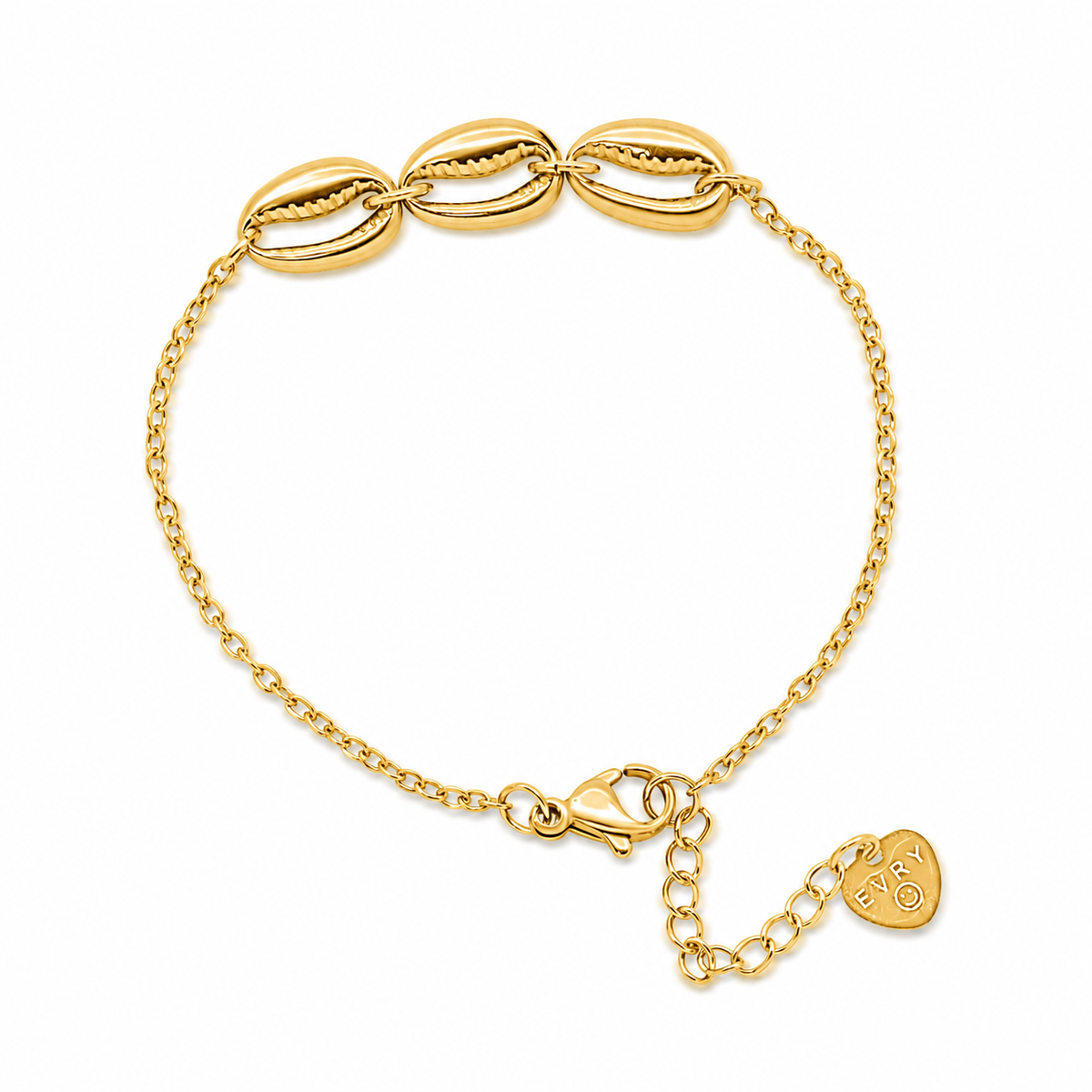
Start with the pearl collection, then narrow to pearl earrings, pearl necklaces or pearl bracelets. For an ocean theme, shell motifs such as the Shell Glow Bracelet and Seashell Necklace echo where nacre comes from. Check each product page for its materials.
Frequently Asked Questions About Mother of Pearl
Is mother of pearl a real pearl?
No. Mother of pearl is not a pearl, but it is made of the same material, nacre. A pearl is a separate gem that forms inside the mollusk around an irritant, or around an inserted bead in cultured pearls, according to GIA. Mother of pearl is the lining of the shell. Both are real, natural mollusk products, so mother of pearl is genuine nacre even though it is not a pearl.
What are the benefits of wearing mother of pearl?
The proven benefits of mother of pearl are aesthetic: a natural iridescence that shifts with the light, a light weight and a soft, versatile look. Tradition adds symbolic meanings of water, life, purity and protection, which the Western Australian Museum traces to a widespread belief linking lustre with rainbows and rain. Claims of healing or energy effects are belief, not established fact.
Why is it called mother of pearl?
The popular explanation is that the shell lining is the "mother" that produces pearls. The Online Etymology Dictionary dates the English term to about 1500, translating the Medieval Latin mater perlarum. Other European languages use the same idea, such as Italian madreperla and German Perlmutter. The material's other common name is nacre.
Who should not wear mother of pearl?
Some astrology traditions advise certain signs to avoid pearl and mother of pearl, but these rules vary by tradition and have no scientific basis. The practical limits are care related: mother of pearl is soft, and GIA warns that acids, perfume and even perspiration can damage nacre. Skip it for the gym, the pool or heavy manual work, and put it on after lotion and perfume.
Is mother of pearl worth anything?
Mother of pearl is usually far less valuable than pearls, because every nacre lined shell has a lining while pearls are scarce. Value rises with craftsmanship and history: antique inlays, carved pieces and fine watch dials can be collectible. In 1898 alone, Muscatine, Iowa, made more than 138 million mother of pearl buttons, which shows how plentiful the material once was.
Find your soft glow piece in the EVRY Pearly Girl collection.

